Recon
Public posts, job listings, and vendor announcements become an attacker’s map. The opening track finds exposure in information nobody thought needed hiding.
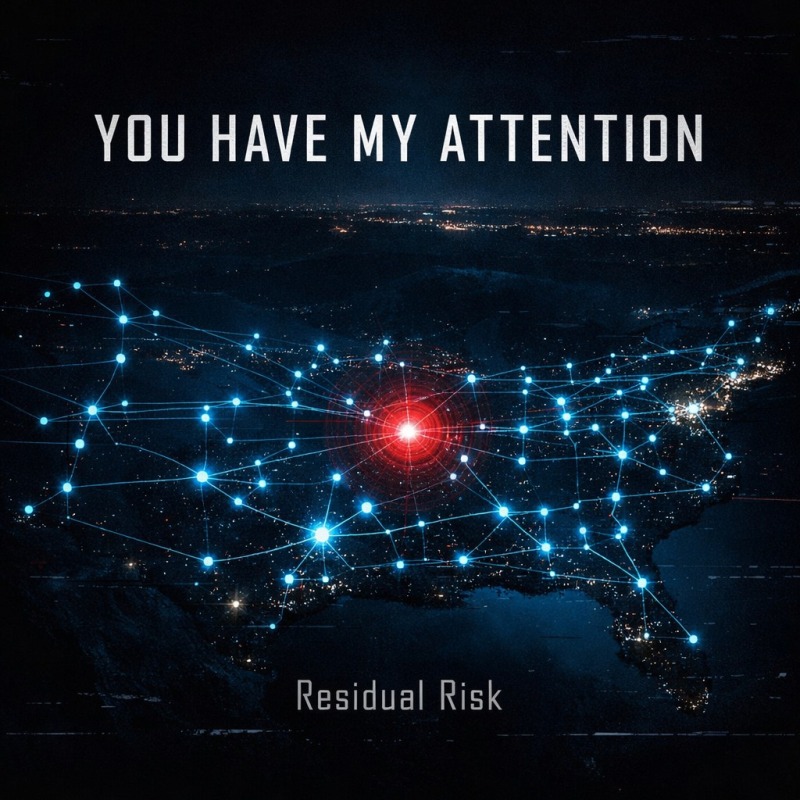
INTRUSION / RESPONSE
The view from the other side of the connection.
A darker intrusion narrative that follows observation, trust, identity, privilege, and command before turning toward response and consequence.
MARCH 27, 2026 / 12 TRACKS / ZERO DAY RECORDS
The red-team branch of the writing explored a more patient musical approach after an industrial direction did not land as intended. Reconnaissance became quieter, more spacious, and observational: public information forming a picture before the target notices. The released record extends that change in perspective into a wider intrusion-and-response story. These notes describe its narrative; the exploratory drafts are not presented as final masters.
THE RECORD, IN ORDER.
Public posts, job listings, and vendor announcements become an attacker’s map. The opening track finds exposure in information nobody thought needed hiding.
A familiar interaction turns trust into access. The narrator moves from imitating the victim’s world to taking over a session the systems still consider valid.
The attacker uses the tools and workflows already present in the account. Nothing obvious breaks, and the activity resembles the legitimate user carrying on as usual.
Revoked access is a setback rather than an ending. The attacker uses what was learned to look for another route through the same underlying design.
Directories, shares, reused credentials, and familiar patterns reveal the environment. A supposedly separate network becomes reachable when trust extends farther than expected.
Existing roles and broad permissions provide a step upward. The attacker’s reach expands through access granted long before the intrusion.
The story crosses from observing the system to changing its state. Legitimate commands and trusted interfaces begin answering to someone other than the operator.
Access is stable and capability is tested, but disruptive action has not happened yet. This is the uneasy interval before the instruction arrives.
The waiting ends and rehearsed changes begin to spread. Trusted connections that made routine work easy now carry the attacker’s instructions.
Different teams notice the same strange drift and compare observations. Shared signals turn isolated uncertainty into a recognizable incident.
Responders revoke access, segment paths, and coordinate containment. Systems stabilize, but containing an incident and removing it remain different things.
The bonus track follows what remains after apparent containment. An exception, reused trust, and fractured coordination leave room for the incident to return.